
Contracts form the foundation of most business relationships. Whether you are engaging a supplier, taking on a new client, entering into a partnership or purchasing services, contracts help define expectations, allocate risk and provide legal protection when things go wrong.
However, many business owners sign contracts without fully understanding their terms. In the excitement of securing a new opportunity or moving a deal forward, it can be tempting to focus on the commercial benefits rather than the legal implications.
Unfortunately, failing to review a contract properly can result in unexpected liabilities, disputes and financial losses.
Before signing any agreement, business owners should take the time to ask a number of important legal questions. Understanding the answers can help protect your business and ensure you are entering into agreements with confidence.
Do I Fully Understand My Obligations?
One of the most common causes of contractual disputes is a misunderstanding about what each party is actually required to do.
Before signing a contract, business owners should carefully review the obligations they are agreeing to undertake. This includes considering not only the services or products being provided, but also any ongoing responsibilities that may continue throughout the life of the agreement.
Questions to ask include:
- What exactly am I agreeing to provide?
- Are there deadlines or performance targets?
- What happens if circumstances change?
- Are there reporting or compliance requirements?
- Is the scope of work clearly defined?
Vague or poorly drafted clauses can create uncertainty and increase the risk of disagreement later on.
Business owners should also consider whether they have the resources, staffing and capacity to fulfil the obligations being imposed by the contract. Agreeing to unrealistic commitments can lead to breaches of contract and damage business relationships.
Understanding your obligations from the outset can help avoid costly disputes and ensure expectations are clear for all parties involved.
What Risks Am I Taking On?
Every contract involves some degree of risk, but not all risks are immediately obvious.
Many contracts contain provisions that allocate liability between the parties. These clauses can have significant financial consequences if something goes wrong.
Before signing a contract, business owners should consider:
- Am I accepting responsibility for losses suffered by another party?
- Are there limitations on the other party’s liability?
- Are there indemnity clauses?
- What happens if there is a dispute?
- Can the other party terminate the agreement easily?
In some cases, businesses unknowingly agree to terms that expose them to substantial liabilities while offering little protection in return.
Particular attention should be paid to clauses relating to payment, liability, termination, intellectual property and dispute resolution.
The goal is not necessarily to eliminate all risk, but to ensure that the risks being accepted are reasonable and proportionate.
A contract should provide certainty and protection, not create unnecessary exposure.
What Happens If Things Go Wrong?
Many business owners focus on how a contract will operate when everything goes according to plan. However, some of the most important provisions relate to what happens when things do not go as expected.
Disputes can arise for many reasons, including delays, non-payment, poor performance or changes in business circumstances.
Before signing, businesses should ask:
- How can the contract be terminated?
- What notice periods apply?
- Is there a dispute resolution procedure?
- What remedies are available if the other party breaches the agreement?
- Can legal costs be recovered?
Understanding these provisions before entering into an agreement can help businesses make informed decisions and avoid unpleasant surprises later.
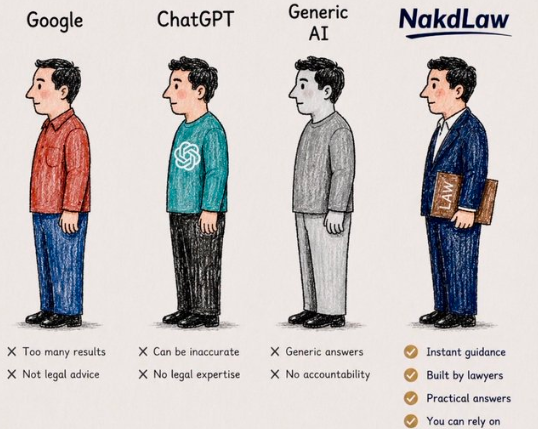
Increasingly, businesses are turning to legal technology to help them better understand contractual terms before signing.
One example is NakdLaw, an AI-powered legal platform designed to help individuals and businesses navigate common legal questions.
Unlike many generic AI tools, NakdLaw is built using the knowledge, materials and expertise of practising lawyers. Its answers are checked and moderated by lawyers, helping users access legally informed guidance that reflects real-world legal practice.
For business owners reviewing contracts, legal technology can provide a useful starting point for understanding common contractual terms, identifying potential risks and highlighting areas that may require further consideration.
While technology cannot replace tailored legal advice, it can help businesses become more informed and ask the right questions before entering into legally binding agreements.
When Should a Business Seek Legal Advice?
Not every contract requires extensive legal involvement. However, there are circumstances where obtaining professional advice is highly advisable.
Businesses should consider seeking legal advice where:
- The contract involves significant financial commitments
- Liability clauses appear one-sided
- Intellectual property rights are involved
- The agreement contains complex or unusual terms
- There is uncertainty about the meaning of key provisions
Obtaining advice before signing a contract is often considerably less expensive than resolving a dispute after the agreement has been entered into.
Legal advice can also help identify opportunities to negotiate terms and improve protections for your business.
By understanding the contract before signing, businesses can proceed with greater confidence and reduce the likelihood of future disputes.
Conclusion
Contracts play a crucial role in protecting businesses and managing commercial relationships. However, signing an agreement without fully understanding its terms can expose a business to unnecessary risk.
By asking the right questions before signing a contract, business owners can better understand their obligations, assess potential risks and ensure appropriate protections are in place.
Modern legal technology is helping businesses access legal information more efficiently than ever before. Platforms such as NakdLaw allow users to explore legal questions and gain a better understanding of contractual issues before making important decisions. Because NakdLaw is built using the knowledge, materials and expertise of practising lawyers, with answers checked and moderated by lawyers, it provides a valuable resource for businesses seeking reliable legal guidance.
However, where contracts involve significant obligations or commercial risk, professional legal advice remains essential.
Need Advice on a Business Contract?
If you are reviewing a contract, negotiating terms or dealing with a contractual dispute, Penerley can help. Our experienced commercial solicitors provide practical and commercially focused advice to businesses across England and Wales. Contact Penerley today to discuss your situation and ensure your business is properly protected.
