
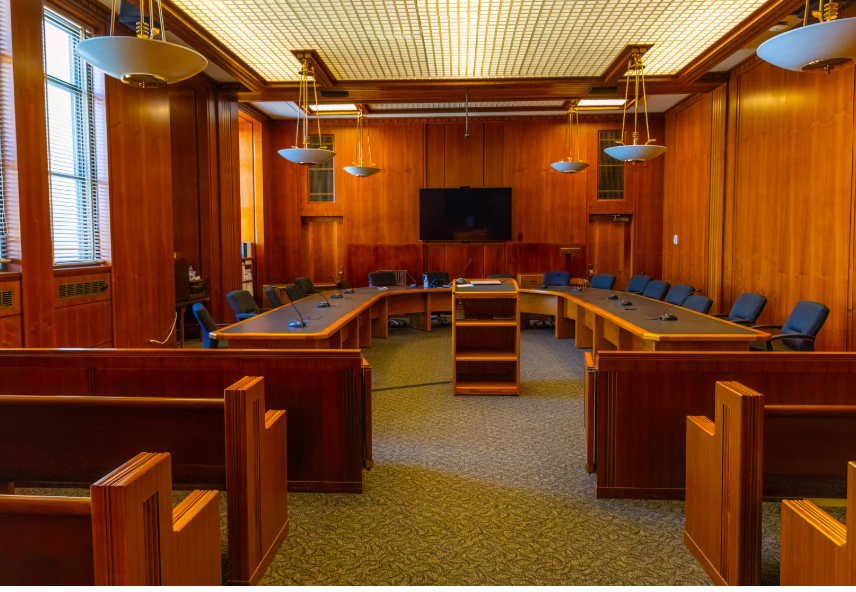
Property disputes can quickly become stressful and expensive, particularly where landlords, leaseholders, freeholders, or managing agents disagree about legal rights or obligations. In England and Wales, some property disputes are dealt with through the First-tier Tribunal (Property Chamber) rather than the traditional court system. Many people are unfamiliar with how the Tribunal operates and assume it functions in the same way as a court. However, there are important differences between Tribunal proceedings and standard court litigation.
The First-tier Tribunal (Property Chamber) is a specialist Tribunal that deals with a wide range of property-related disputes. It was designed to provide a more accessible and specialist forum for resolving certain property issues.
At Penerley Solicitors, we regularly advise landlords, leaseholders, managing agents, tenants, and property owners on Tribunal applications, hearings, and property disputes throughout England and Wales.
What Types of Cases Does the First-tier Tribunal Handle?
The First-tier Tribunal (Property Chamber) deals with specialist property matters that would otherwise be difficult or unsuitable for ordinary civil courts. Tribunal judges and panel members often have specific expertise in property law, valuation, surveying, and housing issues.
The Tribunal commonly deals with matters including:
- Residential leasehold disputes
- Service charge disputes
- Appointment of managers
- Lease variations
- Right to Manage claims
- Rent repayment orders
The Tribunal may also determine disputes involving administration charges, enfranchisement matters, park homes, and certain landlord and tenant disputes.
One of the key differences between the Tribunal and ordinary court proceedings is the level of formality. Tribunal hearings are generally designed to be more accessible to individuals without legal representation. Hearings are often less formal than County Court proceedings, although they still involve legal rules and procedural requirements.
Many parties appear before the Tribunal without solicitors or barristers. However, this does not mean the process should be underestimated. Tribunal decisions can have significant financial and legal consequences.
The Tribunal also operates under its own procedural rules and case management powers. Directions may be issued requiring parties to provide evidence, witness statements, expert reports, and hearing bundles within strict deadlines.
Failure to comply with Tribunal directions can negatively affect a case.
How Is the Tribunal Different from Court Proceedings?
Although Tribunal proceedings share similarities with court litigation, there are several important differences.
One of the most significant differences relates to costs. In ordinary court proceedings, the unsuccessful party is often ordered to pay a substantial proportion of the successful party’s legal costs. In the First-tier Tribunal, the general position is different.
In many Tribunal cases, each party bears their own legal costs regardless of the outcome. This can make the Tribunal a more accessible forum for resolving property disputes.
However, there are still circumstances where costs may arise. For example:
- Lease provisions may allow recovery through service charges
- The Tribunal may award costs for unreasonable conduct
- Application fees and hearing fees may still apply
- Professional representation costs may still be incurred
- Appeals can increase costs significantly
Another key difference is the structure of the hearing itself.
Tribunal hearings are often more discussion-based and less adversarial than traditional court hearings. Panels may include both legally qualified judges and specialist members with property expertise.
Evidence is still extremely important. Parties are expected to support their arguments with documents, correspondence, photographs, expert reports, lease documents, and witness evidence where appropriate.
Tribunal judges may ask questions directly to the parties during the hearing.
Unlike some court proceedings, strict rules of evidence may sometimes be applied more flexibly. Nevertheless, preparation remains essential.
The Tribunal also has powers to inspect properties directly where relevant to the dispute.
Appeals from the First-tier Tribunal are generally made to the Upper Tribunal (Lands Chamber).
Why Legal Advice Still Matters
Although the First-tier Tribunal is intended to be more accessible than court proceedings, property disputes can still be legally and procedurally complex.
Poorly prepared applications, incomplete evidence, or misunderstandings regarding lease terms can significantly weaken a case.
Property disputes often involve substantial sums of money and long-term consequences for landlords, leaseholders, or property investors.
Common mistakes parties make include:
- Missing procedural deadlines
- Failing to provide adequate evidence
- Misunderstanding lease provisions
- Pursuing weak claims
- Underestimating legal risks
Legal advice can help parties understand the strength of their position, prepare evidence properly, comply with Tribunal directions, and negotiate settlements where appropriate.
In some situations, resolving disputes before a full hearing may save considerable time and expense.
At Penerley Solicitors, we advise clients across England and Wales on First-tier Tribunal proceedings, leasehold disputes, service charge disputes, lease variations, and landlord and tenant matters.
Our team can assist with applications, evidence preparation, negotiations, representation at hearings, and appeals where necessary.
If you are involved in a property dispute or require advice regarding Tribunal proceedings, contact Penerley Solicitors today to speak with a member of our property litigation team.
