
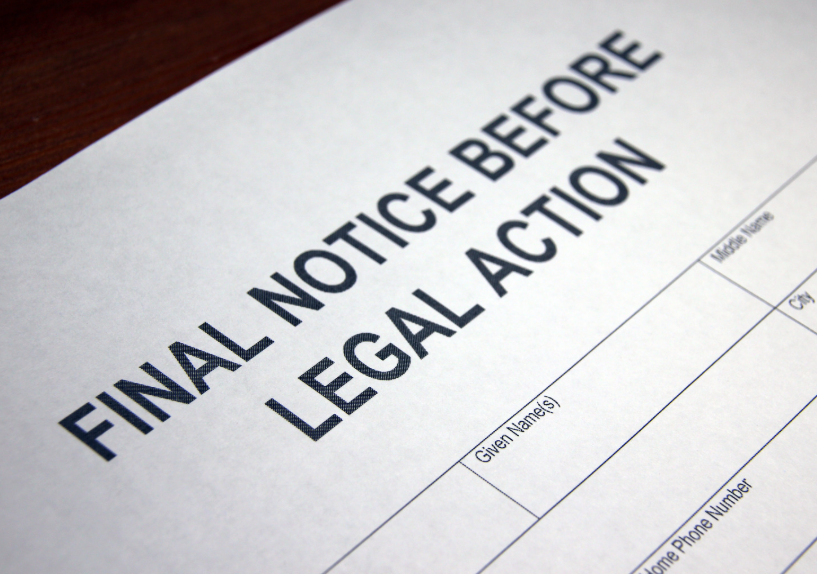
Receiving a Letter Before Action can be concerning, particularly for individuals or businesses unfamiliar with legal disputes. Equally, parties considering legal action often want to understand what happens after a Letter Before Action has been sent.
A Letter Before Action is usually a formal letter sent before court proceedings are issued. It forms part of the pre-action process and is intended to set out the nature of the dispute, the legal basis of the claim, and the action required to resolve the matter.
In England and Wales, parties are generally expected to engage in pre-action conduct before commencing civil proceedings. Ignoring a Letter Before Action can create serious legal and costs consequences.
At Penerley Solicitors, we regularly advise individuals and businesses on pre-action disputes, debt recovery, commercial litigation, and civil claims throughout England and Wales.
What Is the Purpose of a Letter Before Action?
The main purpose of a Letter Before Action is to give the recipient an opportunity to respond before court proceedings are started.
The letter usually outlines:
- The nature of the claim
- The factual background
- The remedy sought
- A deadline for response
- Potential legal action if unresolved
The Civil Procedure Rules encourage parties to exchange information and attempt to resolve disputes before litigation where possible.
A properly drafted Letter Before Action can often lead to settlement discussions without court proceedings becoming necessary.
Letters Before Action commonly arise in disputes involving:
- Unpaid invoices
- Breach of contract
- Property disputes
- Professional negligence
- Landlord and tenant matters
The recipient should not ignore the letter.
Failure to respond may later be criticised by the court, particularly if proceedings are issued.
What Should You Do After Receiving One?
The first step is usually to review the contents carefully.
Recipients should consider:
- Whether the allegations are accurate
- Whether documents support the claim
- Whether legal advice is needed
- Whether settlement may be appropriate
- Whether insurance cover exists
It is important not to respond emotionally or aggressively.
Poorly drafted responses can weaken a party’s position later in the dispute.
In many cases, legal advice should be obtained early, particularly where substantial sums of money or complex legal issues are involved.
The response may involve:
- Admitting the claim
- Denying liability
- Requesting further information
- Making settlement proposals
- Raising a counterclaim
Some disputes may proceed to mediation or negotiation after a Letter Before Action has been exchanged.
Courts generally encourage parties to explore alternative dispute resolution where appropriate.
Refusing to engage reasonably in settlement discussions can sometimes have costs consequences later.
What Happens If the Matter Is Not Resolved?
If the dispute cannot be resolved, the claimant may decide to issue formal court proceedings.
This usually involves filing a claim with the appropriate court together with supporting particulars of claim.
The defendant will then normally have a limited period to respond.
Possible responses may include:
- Filing a defence
- Admitting the claim
- Negotiating settlement
- Bringing a counterclaim
- Seeking additional time to respond
Once proceedings are issued, the court will manage the case through various procedural stages which may include disclosure, witness evidence, expert evidence, and eventually a trial if settlement is not reached.
Litigation can become time-consuming and expensive.
For this reason, early settlement discussions are often commercially sensible.
Parties should also preserve relevant documents and evidence from the outset of the dispute.
Deleting documents or failing to retain evidence may create difficulties later in proceedings.
Why Legal Advice Matters
A Letter Before Action should always be taken seriously.
Whether you are bringing a claim or defending one, early legal advice can help protect your position and reduce the risk of costly mistakes.
Common errors parties make include:
- Ignoring the letter entirely
- Missing response deadlines
- Making admissions unnecessarily
- Failing to preserve evidence
- Pursuing unrealistic claims
Professional advice can help assess the strength of the dispute, prepare effective responses, negotiate settlements, and minimise litigation risk.
At Penerley Solicitors, we advise businesses and individuals throughout England and Wales on civil disputes, commercial litigation, debt recovery, landlord and tenant disputes, and pre-action correspondence.
Our team can draft Letters Before Action, respond to claims, negotiate settlements, and represent clients throughout litigation proceedings.
If you have received a Letter Before Action or require advice regarding a potential dispute, contact Penerley Solicitors today to speak with a member of our litigation team.
