
Legal documents often seem full of complicated words and phrases that can leave people feeling confused or overwhelmed. Whether you’ve received a letter from a solicitor, signed a tenancy agreement or are reading a contract, understanding the language used is essential.
The good news is that legal terminology doesn’t have to be intimidating. Many commonly used legal terms have straightforward meanings once they’re explained in plain English.
Here are ten legal terms you’re likely to come across and what they actually mean.
Breach of Contract
A breach of contract occurs when one party fails to meet their obligations under an agreement.
For example, if a builder agrees to complete work by a certain date but fails to do so without a valid reason, they may have breached the contract. Likewise, if a customer refuses to pay for work that has been completed, they could also be in breach.
Not every breach automatically leads to court proceedings, but understanding your rights is the first step towards resolving the issue.
Liability
Liability simply means legal responsibility.
If someone is liable for damage, injury or financial loss, they may be legally responsible for putting things right. Liability can arise in many different areas of law, including contracts, negligence, employment and property disputes.
Negligence
Negligence occurs when someone fails to take reasonable care and that failure causes another person to suffer loss or injury.
Examples include careless driving, unsafe workplaces or professional mistakes that result in financial loss.
To establish negligence, several legal elements usually need to be proven, so every situation depends on its individual facts.
Injunction
An injunction is a court order that requires someone to either do something or stop doing something.
For example, a court may issue an injunction preventing someone from entering a property, disclosing confidential information or continuing behaviour that is causing harm.
Ignoring an injunction can have serious legal consequences.
Probate
Probate is the legal process of dealing with someone’s estate after they have died.
It usually involves confirming the validity of a will, collecting assets, paying debts and distributing the estate to beneficiaries.
Not every estate requires a Grant of Probate, but many do.
Executor
An executor is the person appointed in a will to administer the deceased person’s estate.
Their responsibilities may include applying for probate, managing assets, settling debts and ensuring beneficiaries receive their inheritance.
Being an executor is an important legal responsibility and can sometimes be time-consuming.
Settlement Agreement
A settlement agreement is a legally binding contract, most commonly used in employment law.
It usually involves an employee agreeing not to pursue legal claims against their employer in exchange for compensation or other agreed terms.
Before signing a settlement agreement, employees must receive independent legal advice.
Restrictive Covenant
A restrictive covenant is a clause that limits what someone can do after entering into an agreement.
In employment contracts, it may restrict where someone can work or prevent them from contacting former clients for a period after leaving their job.
These clauses are common but are not always enforceable, depending on the circumstances.
Power of Attorney
A Power of Attorney is a legal document that allows one person to make decisions on behalf of another.
In England and Wales, a Lasting Power of Attorney can cover financial matters, health and welfare, or both.
Putting one in place can provide reassurance that someone you trust can act on your behalf if you become unable to make decisions yourself.
Without Prejudice
The phrase “without prejudice” often appears in letters or emails during legal disputes.
It generally means that the communication is part of confidential settlement discussions and cannot usually be relied upon as evidence in court if negotiations fail.
This encourages parties to negotiate openly without worrying that their attempts to settle will later be used against them.
Why Understanding Legal Language Matters
Legal documents are often full of technical terminology, but understanding the language can help you make informed decisions and avoid unnecessary confusion.
Whether you’re signing a contract, dealing with a dispute or simply researching your rights, knowing what common legal terms mean makes it much easier to understand your options.
Let NakdLaw Explain the Law in Plain English
You don’t need a law degree to understand legal terminology.
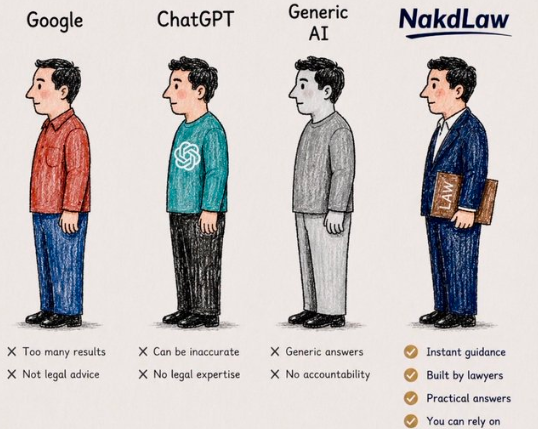
NakdLaw is an AI legal chat designed to explain legal concepts in clear, straightforward language. Whether you’ve come across an unfamiliar legal term, want to understand your rights or need help making sense of a legal document, NakdLaw provides instant, accessible legal information to help you feel more confident.
Legal issues can be complicated, but understanding them doesn’t have to be. Start your legal journey with NakdLaw and get clear answers to your legal questions in seconds.
